About
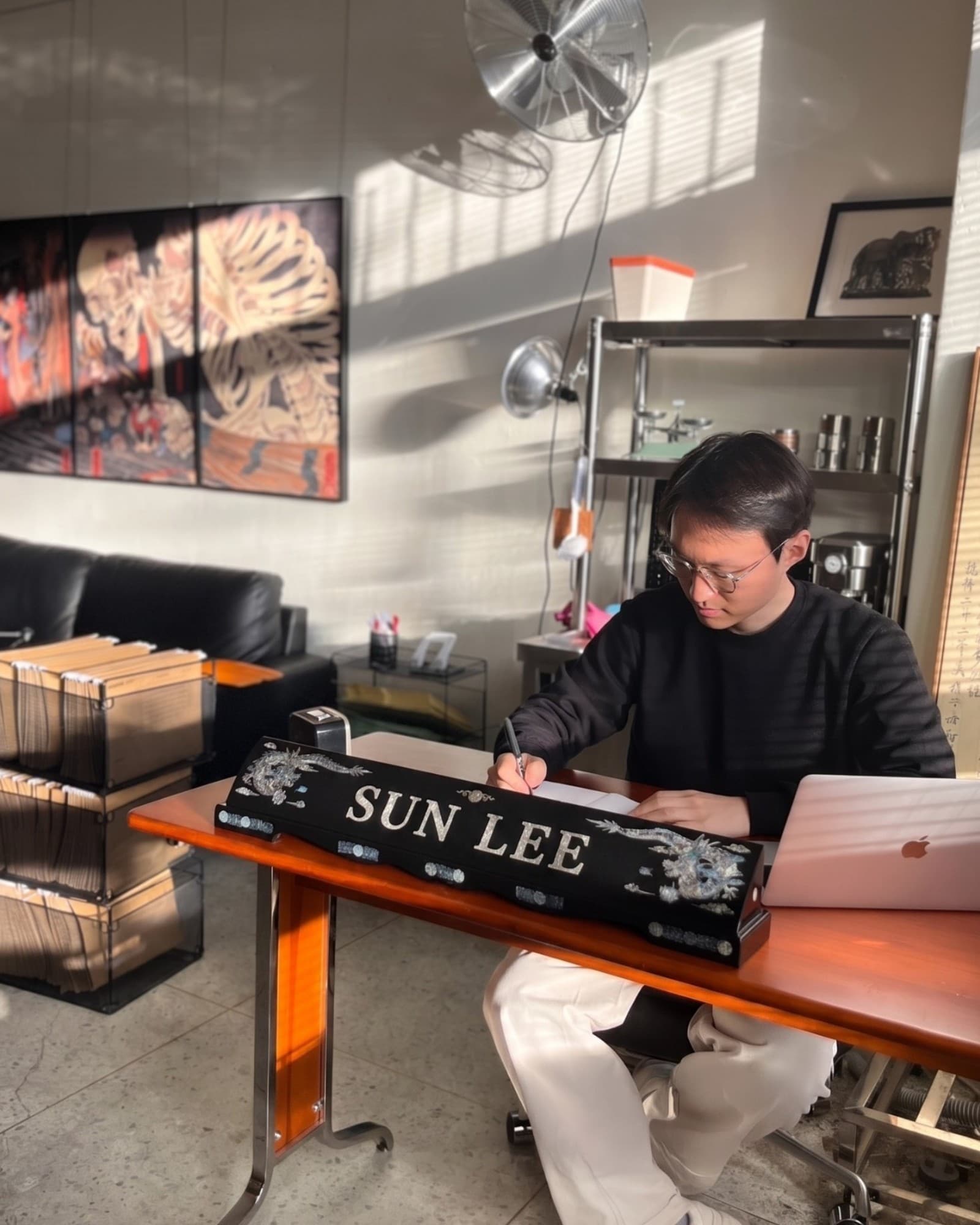
Hi, I'm Sun.
I read Korean saju and feng shui from Gimcheon, a quiet mountain village in the south of Korea. Every reading is read and finalized by me personally — one chart, one question, one person at a time. If you're here, you probably have a question that won't leave you alone. That's exactly the kind of question your chart was built to answer.
The story
Everything ended at once. So I started running.
Early this year I lost most things at the same time. The fermented-drinks business I had built closed. A six-year relationship ended. A few weeks after that I collapsed on a subway platform and woke up in an emergency room, which is a blunt way for a body to tell you it has been carrying more than it said.
What stayed with me longest wasn't the business. It was a sentence: that I didn't want anything badly enough, and didn't look at anything hopefully enough, to build a future with. I turned that over for weeks. I still do.
Then I walked past a talk I hadn't meant to hear. Someone on stage said: if you don't know what to do, run. It was almost too simple to take seriously, so I took it literally. I started running the next morning. Three months later I finished a half marathon.
Running is where I do my clearest thinking, which is strange, because it's the one time I'm not thinking at all. Somewhere past the point where my lungs take over, everything empties out — and what comes back into the space is usually the thing I actually needed. That's where this work arrived.
I had grown up around saju the way most Koreans do: a chart consulted before a marriage, a move, a new year. During those months I went at it properly — the Four Pillars, the ten stems, the twelve branches, and then feng shui, which turned out to be the same grammar applied to rooms instead of people. Somewhere in the studying it stopped being a way to understand my own year and became the thing I most want to do with my days.
Sunvigation grew out of that. Helping someone navigate their own luck — naming what they were born carrying, and where the door in front of them actually opens — is the first work I've been both happy at and good at.
Philosophy
Your chart is a compass, not a cage.
I don't believe in fortune-telling. I don't tell people when they'll get married or how long they'll live. The future isn't fixed and I'm not in the business of pretending otherwise.
What saju does — what it's really good at — is naming the patterns you were born into. The kinds of people you reach for. The shape your love tends to take. The seasons of your life that feel like tailwinds, and the ones that feel like walking into fog. Once you can name a pattern, you stop being trapped inside it.
Every reading I write is meant to leave you with one thing: a clearer sense of which direction you're facing. What you do from there is yours.
How I write
Personally, in English, with your specific question in mind.
- 01
I calculate your chart from the classical almanac.
Four pillars, ten heavenly stems, twelve earthly branches, corrected to true solar time for the city you were born in. The same method Korean readers have used for centuries.
- 02
I read it for the question you brought.
A chart can be read a hundred ways. Your concern tells me which lens to use.
- 03
I write in plain English.
No mystic jargon. If I use a Korean term, I explain it. You shouldn't need a glossary to understand your own life.
- 04
I never use fear.
No warnings, no curses, no "you must do this or else." Every reading ends with where to walk, not what to fear.
Feng shui
People and spaces speak the same language.
The further I went into saju, the more naturally feng shui followed. The five elements — Wood, Fire, Earth, Metal, Water — are the same in both. Saju is about reading how those energies are arranged in a person. Feng shui is about reading how they move through a space. Same vocabulary, different subject.
Living in Seoul, moving between apartments, I started to feel this directly. Same person — but certain rooms made sleep come easy and others made me restless for no reason I could name. Some desks made concentration feel effortless; others felt like fighting the room. At first I called it mood. After studying feng shui, I understood it was arrangement.
A space consultation isn't a prediction. It's a close look at what you're already living inside — and what could be rearranged to hold your life better. You don't need to buy anything new. In most cases, moving what you already have is enough.
Ready to begin?
Pick whichever direction fits the question you came in with.